 Coming Soon
Coming Soon
Coming Soon
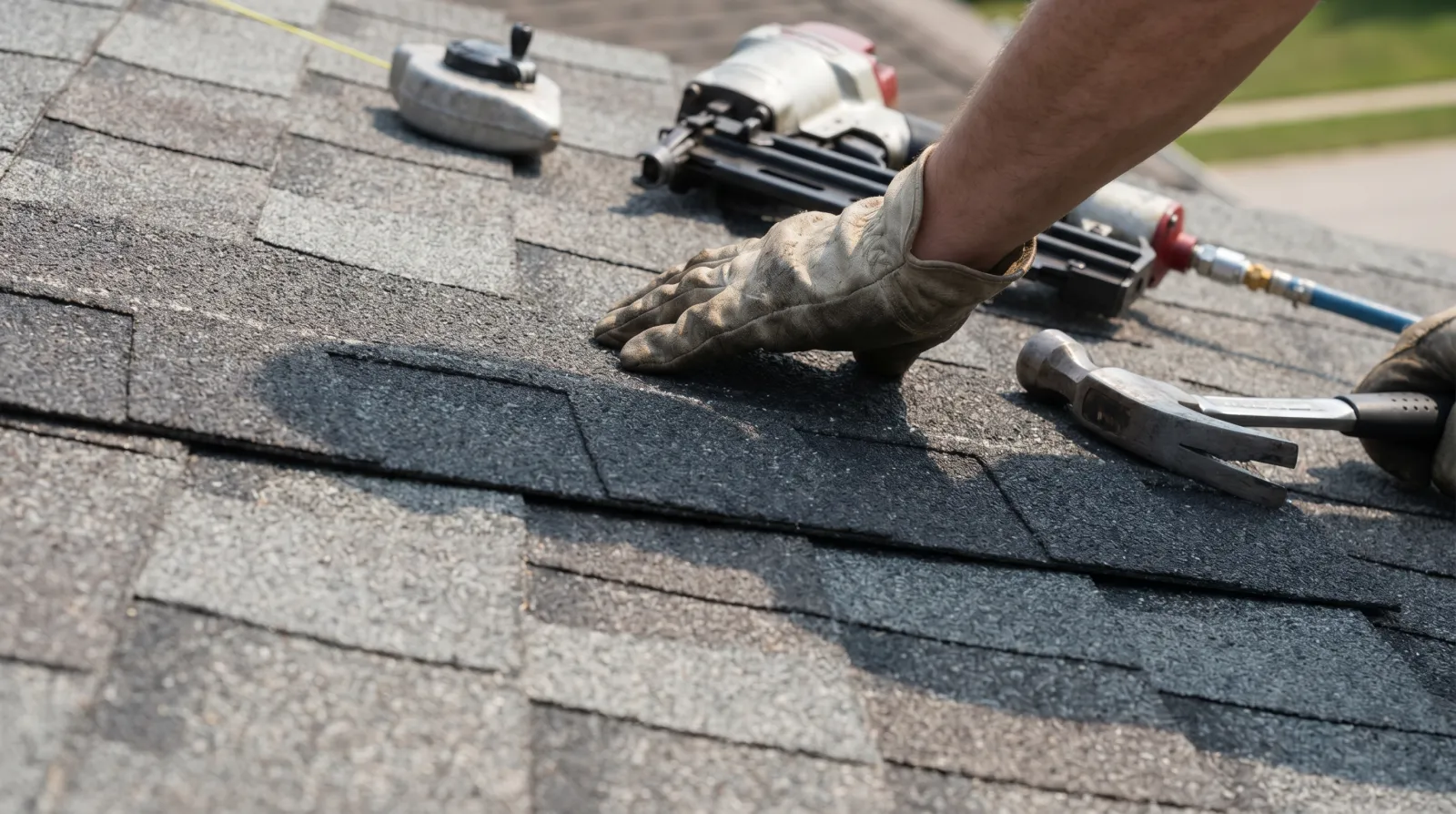
Most Oklahoma roofers price repairs in one of three ways: a flat-rate minimum trip charge, an hourly labor rate plus materials, or a per-square-foot rate for larger patch jobs. The flat-rate minimum is the floor — even if the only thing you need is a single pipe boot replaced, you'll typically pay $250–$450 just to get a crew on a roof. That minimum covers truck time, supplies, ladder setup, dump fees, and the cost of having a real licensed contractor (not a handyman) on your home.
Above the minimum, the cost drivers are stacked predictably:
| Repair Type | Typical Oklahoma Range | Time on Site |
|---|---|---|
| Replace a few wind-blown shingles | $350–$650 | 1–2 hrs |
| Pipe boot / vent boot replacement | $350–$550 | 1–2 hrs |
| Flashing repair (chimney, sidewall, skylight) | $450–$1,200 | 2–4 hrs |
| Valley repair / replacement | $700–$2,200 | 4–8 hrs |
| Single slope reshingle (mid-size home) | $1,800–$4,500 | 1 day |
| Soffit and fascia repair (per section) | $400–$1,500 | 2–6 hrs |
| Decking replacement (per sheet of 4x8 OSB/plywood) | $110–$220 installed | add to repair |
| Emergency tarp-up (post-storm) | $400–$1,200 | 1–3 hrs |
Oklahoma's spring storm season routinely produces sustained 50–70 mph winds, with severe events pushing into 80+ mph straight-line winds and tornado-adjacent gusts. Those winds break the adhesive seal beneath shingle tabs. Sometimes the shingles flip and reseat; sometimes they're gone in the front yard. Wind-blown shingle replacement is the bread-and-butter Oklahoma repair: a competent crew can replace a handful of shingles in 1–2 hours and have you watertight before they leave.
Color matching is the catch. If your roof is more than 5–6 years old, the original shingle color has weathered to a slightly different tone, and the replacement will be visible if you look for it. Most homeowners accept this on a back slope; on a prominent front slope, consider whether a single-slope reshingle is worth it.
The rubber gaskets around plumbing vent stacks ("pipe boots") and roof vents dry out and crack after 8–12 years of Oklahoma sun. This is one of the most common sources of slow ceiling leaks — water enters through the deteriorated rubber, runs down the inside of the vent stack, and shows up on a ceiling far from the actual entry point. Replacement is fast and cheap. If you see a brown ring on a bedroom ceiling and your roof is over 10 years old, this is the first place a competent roofer will look.
Flashing is the metal that seals roof penetrations and transitions where the roof meets a vertical surface. Chimney flashing in particular gets a brutal workout in Oklahoma — masonry expands and contracts with temperature swings, the chimney crown cracks over decades, and step flashing along the sides loosens. Skylight curb flashing has the same failure mode. A flashing repair done correctly should include removing the affected shingles, replacing the step or counter-flashing with new metal, and reshingling — not just slathering caulk over a failure point. Caulk-only "repairs" are a 12-month fix at best.
Valleys are where two roof slopes meet and shed concentrated water. They take the heaviest UV exposure and the highest water volume, so they're often the first part of an asphalt roof to fail. A valley repair may be as simple as reshingling a small section with proper ice-and-water shield underneath, or as involved as a full valley rebuild with new metal flashing. On hail-damaged roofs, valleys also see the most concentrated impact damage because the angled surface catches stones from multiple directions.
Soffit is the underside of the roof eave; fascia is the vertical board behind the gutter. Wind-driven rain in Oklahoma rots fascia from the back side over years, and squirrels and birds chew through soffit panels to nest in attics. Repair is usually straightforward: replace the rotted board, paint or wrap with aluminum, and reattach the gutter. Watch for the upsell — some contractors will quote a full perimeter wrap when only one section is actually damaged.
After a major storm, water is already inside the home and the priority is stopping further damage. This usually means a tarp-up: a heavy-duty tarp is laid over the affected slope and secured with furring strips. This is not a permanent repair; it's a 30–90 day buy-yourself-time fix while the insurance process plays out. For a deeper walkthrough of emergency mitigation, see the Oklahoma emergency roof repair guide.
The honest answer is that the right call depends on four variables: age of the roof, extent of damage, decking condition, and whether you've already chased this leak before. Walk down this decision tree:
Damage is localized to one or two slopes; the roof is less than 10 years old; the decking is dry and intact; this is a first-time issue at this location; the repair cost is well below your insurance deductible (so you'd pay out of pocket either way).
The roof is 10–15 years old; this is the second time you've had work done in the same general area; one or two slopes have significant granule loss but others look OK; the cost of a quality repair is approaching 25–35% of a full replacement; you've had a recent hail or wind event that may have damaged more than the visible area.
The roof is more than 15 years old on standard asphalt; you can see widespread granule loss in gutters; more than 25–30% of slopes have visible damage; you've chased the same leak more than twice; the decking under the leak is soft or rotted; an insurance claim has been approved for full replacement. For the full replacement walkthrough, see the Oklahoma roof replacement guide.
If you're in OKC specifically, the diagnostic page 10 Signs You Need a New Roof in OKC goes deeper on the visible-from-the-ground indicators that push the decision toward replacement.
The mental model that trips up most Oklahoma homeowners: insurance is designed to cover sudden, accidental damage from a covered peril (wind, hail, falling tree, fire), not gradual wear-and-tear. That distinction drives everything about how partial repairs are handled.
You file a claim. An adjuster inspects. They write a scope of loss that may be for a partial repair (a single slope, a section of flashing) or a full replacement depending on extent. You pay your wind/hail deductible, and insurance pays the rest. In Oklahoma, wind/hail deductibles are commonly 1–2% of dwelling coverage — on a $300,000 home, that's $3,000–$6,000.
If the partial-repair scope is below your deductible, filing makes no sense. You're paying out of pocket regardless. Many small Oklahoma repairs (single pipe boot, a few wind-blown shingles) are below most deductibles.
Homeowners insurance in Oklahoma is not a maintenance policy. A 14-year-old roof that's worn out is not covered. A pipe boot that dried out and cracked over a decade is not covered. Roofers occasionally try to bundle wear-and-tear damage into a storm claim — this is fraud, and it's illegal under Oklahoma insurance code. Don't sign anything that mischaracterizes wear-and-tear as storm damage.
Oklahoma is not a strict matching-statute state, but most homeowner policies include some matching language for repairs. If your insurer pays for a partial repair and the replacement shingles are visibly different from the surrounding roof, you may have grounds to request a broader scope. This is one of the most common supplement disputes Oklahoma contractors and public adjusters file. The argument: a covered loss should restore the property to its pre-loss condition, and a glaringly mismatched front slope does not meet that standard.
For the procedural walkthrough of filing any Oklahoma roof claim — including documentation, adjuster meetings, and supplement disputes — see the Oklahoma roof insurance claim step-by-step guide. For the broader state-level legal framework — bad-faith laws, recoverable depreciation, public adjuster rules — see the Oklahoma roof insurance claims overview.
Most Oklahoma cities exempt small repairs from permit requirements. Oklahoma City's residential building code (administered by OKC Development Services) generally requires a permit when more than one roof square (100 square feet) is being replaced, or when structural decking is being altered. Suburbs vary — Edmond, Norman, Moore, and Yukon each have their own thresholds. Your contractor should know the local rule. For a deeper look at Oklahoma's contractor registration and permit landscape, see the Oklahoma roofing licenses and permits page.
Asphalt shingle manufacturers (GAF, Owens Corning, CertainTeed, Malarkey, Atlas) offer limited material warranties typically running 20–50 years depending on the line. A repair performed correctly using matching or manufacturer-approved materials should not void that warranty for the rest of the roof. The risks are: using off-brand shingles, improper nail placement, or unapproved sealants. Ask your contractor to document materials used.
Contractor workmanship warranties on repairs are typically much shorter than full-replacement warranties — often 1–5 years. Get the warranty in writing. A 90-day verbal warranty isn't worth much when a leak shows up 8 months later.
RoofQuoteHQ matches Oklahoma homeowners with one vetted local roofer per project — including repairs, inspections, and full replacements.
Join the Homeowner Waitlist →